Finally we were almost in for our second ornithological highlight of the trip, the Island of Kapiti. But we still had two whole days to kill while waiting for our permission, as only 50 people are allowed to go each day. One of the fun things to do while traveling is finding a place to spend the night and this we did in the lovely but hard to pronounce village of Paraparaumo. The accommodation was ok, the girls got their own room to share with other girls, while I ended up in the one of the mens rooms to share with all the biggest snorers south of the equator.
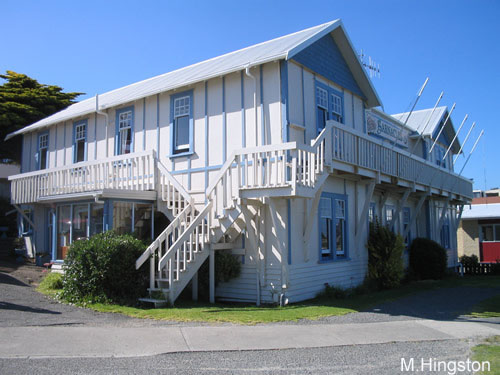
A typical backpacker/ motel combo. Rooms to the front are the nicest and are generally booked out five years in advance or will be given to the folks that have arrived half an hour before you did. In back there is ample space for the riffraff to squeeze in and try for a nap.
The following day was beach day, and as a little feathered ornithological treat some Royal spoonbills (Platalea regia) showed up on the scene, digging in the muddy estuary next to the beach and looking utterly silly with their big noses. It is a self-introduced bird originating from Australia which began breeding in New Zealand in the early 1940’s.
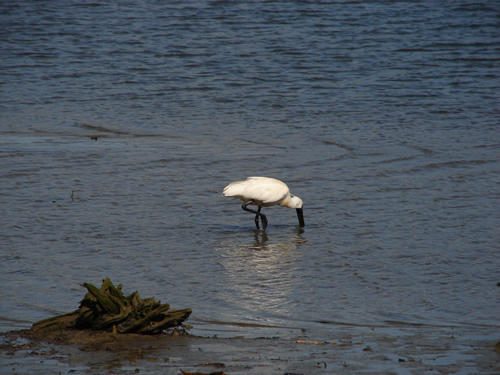
A Royal Spoonbill whith its nose in mud.
Another sleapless nigth and off to Kapiti we went. From Wikipedia: The conservation potential of the island was seen as early as 1870. It was reserved as a bird sanctuary in 1897 but it was not until 1987 that the Department of Conservation took over the island. In the 1980s and 1990s efforts were made to return the island to it’s natural state; first sheep and possums were removed. In an action few thought possible for an island of its size, rats were eradicated in 1998. We went to the North end of the island, a part that has only recently been opened to the public and does not yet have the native forest that grows further South. On the way over fish and seals were visible in the water around the boat, the area has just been assigned as a marine reserve as well (much more fascinating than birds). But alas onwards to the Island we went, saw Wekas and Kererus and Robins and whatnot, before returning back to the North Islands coast and heading North to Mount Taranaki.
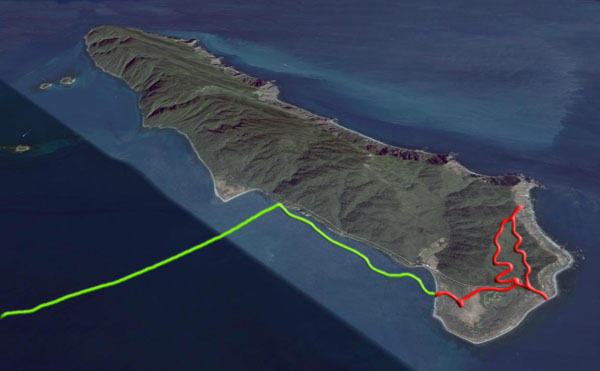
The reserve Kapiti Island as seen from space Google
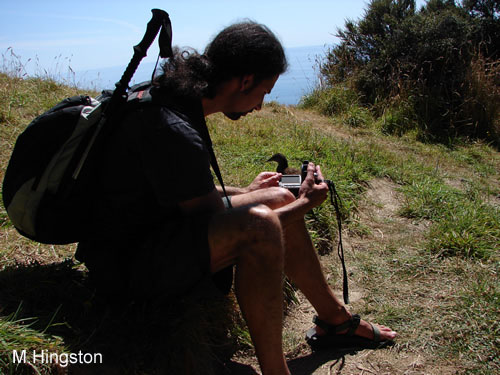
A foolish Weka (Gallirallus australis) cought on film while trying to get at our food.
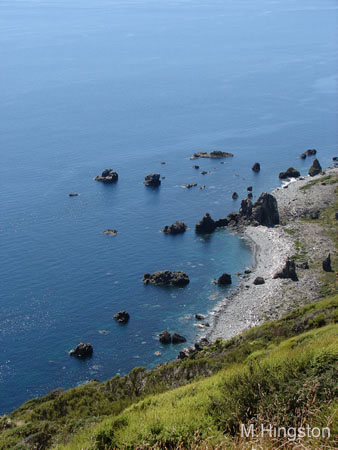
View from the top o the Island onto a blue and inviting Ocean