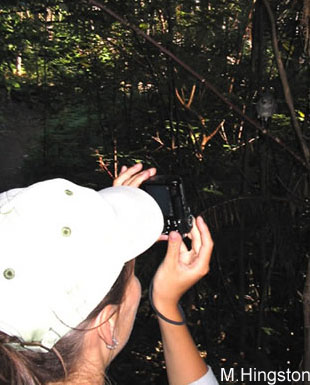
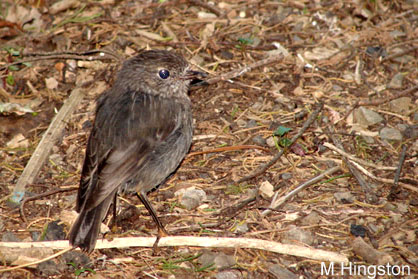
The connection between bird (North Island Robin) and birder (Lorni)
After driving through sheep county all morning Lorni and I made it to Mount Doom to pick up Melli only a few hours after her bioinformatics conference had ended. Back in the car, Melli at the wheel again, we drove past Palmerston North down towards New Zealand’s capitol. In my mind I tried to make a heroic poem about the city of Palmerston North and its founders, involving phrases like „oh, je salt of the earth,… sheep farmer, thine eye shinest bright, ..“. My exploits were dropped soon though, because a. I don’t even know the place, and b. it was not really funny.
Finding a place to stay proved difficult, as the bloody rugby match between Wellington and Auckland was on in the city and all hostels and backpackers were booked out. I can’t remember who won, but I still know who lost, namely us having to pitch up tents in the stormy night at a strange caravan park. Strange in the sense that the caravans were almost all to run down to be driven somewhere and many seemed to have agreed to this retirement and planted flowers in front of them. And a strange melody wavered through the storm..
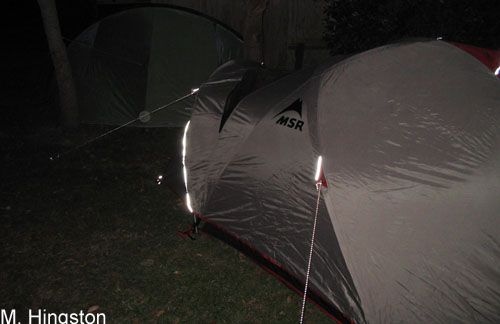
On a dark Wellington byway, cool wind in my hair
Warm smell of sausage rolls, rising up through the air
Up ahead in the distance, I saw a shimmering light
My head grew heavy and my sight grew dim
I had to stop for the night
…
There where voices down the laundry room, and I thought I heard them say
Welcome to the caravan motor home Porirua
Such a lovely place, Such a lovely face
Plenty of room at the motor home Porirua
Any time of year, you can find us here
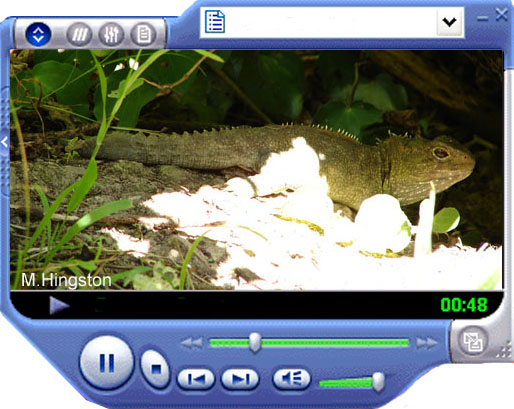
The next day in Wellington wasn’t as windy as everyone always says; we took the train into town and tried to think of what to do. Coffee. There is also a great museum in Wellington, showing art, culture and natural history. To this we did not go, but went birding at the Karori Wildlife Sanctuary instead. In the sanctuaries own words: „Karori Sanctuary is a safe haven for endangered native birds and other wildlife, located minutes from downtown Wellington. A unique predator proof fence surrounds the Sanctuary, protecting the wildlife and ensuring the forest regenerates to its former glory. This world-first conservation attraction is an inspiring place to visit and learn about New Zealand’s unique wildlife. Discover New Zealand as it wastoday.“ There are lot’s of birds around, Kakas, Wekas, Tuis, Robins and so on, and also a few Tuataras in the sun.

View of the old Karori water reserve from the observation platform within the park.
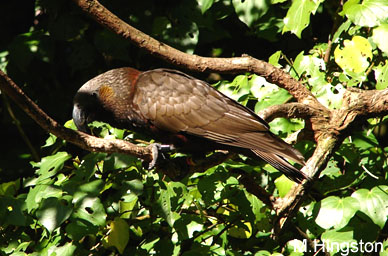
The pest proof fence is very interesting, it looks a bit like the one we used to have running through Berlin. And it goes up and down steep mountain sides. One really has to admire the efforts that go into these places in New Zealand. Watching the birds one can only think that the money is well spent (apart from thinking, why? rats ok, but cats, stoats and hedgehogs? why!!!). The Kakas (Nestor meridionalis) were fun to observe, doing strange gymnastics in the canopy and crapping fruit all over the place, especially on the bench I’m sitting on. Kakas are medium sized parrots that feed on grubs, nectar, fruits and such. They are endangered because of habitat loss and because they are being outcompeted for nectar by invasive wasps and possums.
Getting back in time we spent our supper with the other inmates of the caravan park we had ended up at the night before. They were happily watching either the rugby match and vanishing beer reserves or in another case steaming erotic programs to get into the mood. Good hard working people anyway, salt of the earth, but I don’t want to come off as a snob here, it is bad enough to actually be one from time to time. At least they could afford caravans and didn’t have to rough it in a small tent. The next day we escaped through all the Hut towns, Lower Hut, Middle Hut and Upper Hut, towards a nature reserve that had served as a backdrop for the Lord of the Rings movie’s Rivendell, but that is another story.