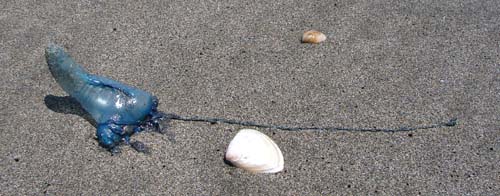
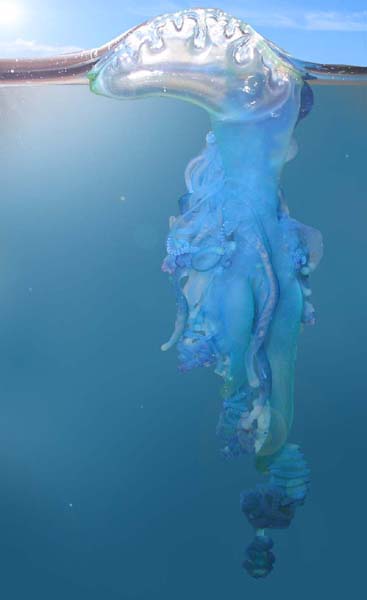
Part of the fun of walking alongside the beaches is that everyday brings something new, a new shell, a piece of kelp, rests of a dead fish or in this case a couple hundred small portuguese manowars, the hydrozoan colonies of Physalia physalis. This being of immense scientific interest, or just because of curiosity I took some home and put them in my little saltwater aquarium. No, they don’t make good pets, for one, they harbour battalions of cnides that can give a severe sting, at least in larger specimen, so petting them is not really a healthy option. The larger Atlantic form of the species has been known to occasionally kill swimmers that get entangled in its very long food catching polyps that trail behind the float like longlines from a fishing vessel. Like Velella velella, Physalia is a colony that drifts by the wind, inhabited by polyps that are specialised to fulfil different tasks, catching food, protection, reproduction and digestion. After a week in the tank they passed away, maybe being hammered by waves while crossing the reef and being stranded on the beach had already taken its toll on them, but keeping them gave an opportunity to watch the lives of those travelling amongst the oceans currents for a while.